

Blog
How to Choose the Perfect Size Shivling for Your Home Altar

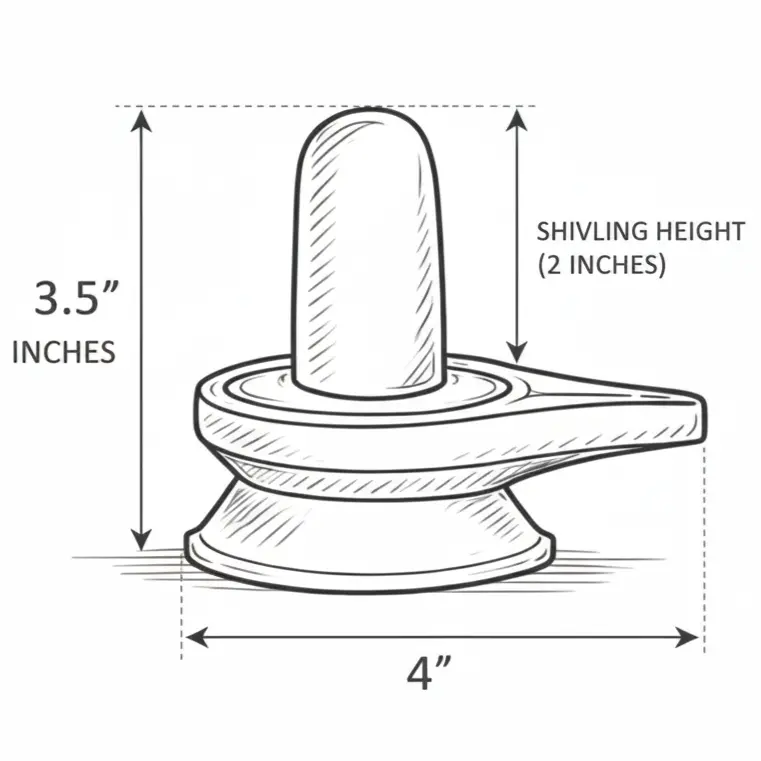
Setting up a sacred space or Pooja Ghar at home brings immense positive energy, peace, and prosperity. Among the various deities, placing a Shivling is considered highly auspicious. However, one of the most frequent dilemmas devotees face is deciding on the right size.
According to ancient scriptures and Vastu Shastra, there are specific guidelines for keeping a Shivling at home compared to a temple. Choosing the correct size ensures that the spiritual vibrations remain balanced and harmonious within a residential space.
Here is a practical guide to help you choose the perfect size Shivling for your home altar.
1. The Golden Rule of Size: Keep it Under 6 Inches
The most crucial guideline for a home temple is the height of the Shivling. According to Vastu and spiritual traditions, a Shivling kept inside a house should ideally be between 2 inches to 6 inches in size. * Why? Large Shivlings (above 6 inches) possess an immense amount of energy that requires strict, elaborate daily rituals, continuous chanting, and massive space—practices that are usually only sustainable in public temples by trained priests. A smaller Shivling emits a gentle, protective energy perfect for a household environment.
2. Measuring Your Altar Space
Before purchasing, measure the actual physical space of your home altar.
- The Yoni Base Factor: Remember that a Shivling consists of two parts—the Lingam (the cylindrical stone) and the Yoni Base (the structure holding it). The base always takes up more horizontal space than the stone itself.
- Make sure there is enough clearance on all sides so you can easily offer water, milk, or flowers during Abhishekam without crowding other deities.
3. Material and Weight Considerations
The size you choose will also dictate the weight of the setup, which matters depending on your temple’s structure:
- Natural Stones (like Narmadeshwar): A 3-inch natural Narmadeshwar Shivling is compact, solid, and fits comfortably on almost any shelf or hanging wall-mandir.
- Heavy Bases: If you choose a large brass or marble Yoni base to accompany a 5 or 6-inch stone, ensure your altar shelf is sturdy enough to support the combined weight.
4. Directing the Flow of Energy
When placing your perfectly sized Shivling, always keep the orientation in mind. The Yoni base should always face the North direction. This means when you stand to pray, you will ideally be facing North or East, allowing the energy generated during your prayers to flow optimally throughout the home.
Conclusion
A home Shivling shouldn’t dominate the entire altar; rather, it should sit harmoniously within it. For most modern homes, a 3 to 4-inch Narmadeshwar Shivling is the absolute sweet spot—it is highly manageable for daily cleaning, perfectly aligned with Vastu rules, and beautifully sized for personal devotion.